Welding & Assembly Services | Find Qualified Manufacturers
Welding and assembly services join metal components through fusion welding, resistance welding, and mechanical assembly to create complete structures and products.
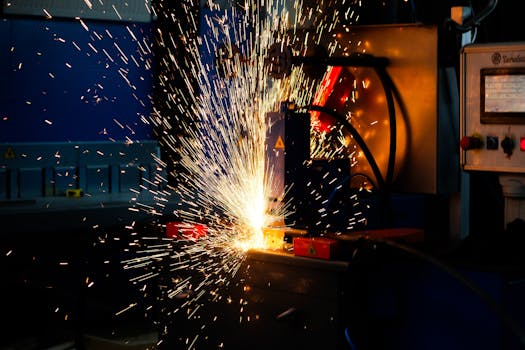
About Welding & Assembly
Welding and assembly is a broad manufacturing capability that joins individual metal components into complete assemblies and structures. Welding processes include MIG (GMAW), TIG (GTAW), stick (SMAW), flux-cored (FCAW), resistance (spot and seam), and specialized processes like laser welding, electron beam welding, and friction stir welding. Assembly services include mechanical fastening, riveting, adhesive bonding, brazing, and soldering. Modern welding shops employ certified welders (AWS, ASME), robotic welding cells for production, and comprehensive quality systems including destructive and non-destructive testing. Welded assemblies are found in virtually every industry.
Tolerances
±0.015"-±0.030" typical for welded assemblies; fixturing improves accuracy
Lead Time
5-15 business days for prototypes; 3-8 weeks for production
Cost Range
$50-$5,000+ per assembly depending on complexity
Compatible Materials
Advantages
- Creates strong permanent joints
- Joins dissimilar thicknesses
- Robotic welding for high volumes
- Structural integrity for load-bearing applications
- Wide range of welding processes available
- Can repair and modify existing structures
Limitations
- Heat-affected zone changes material properties
- Distortion from welding heat
- Skilled welders required for quality work
- Inspection and testing add cost
- Surface finish of welds requires attention
Industries Served
Aerospace
The aerospace industry manufactures aircraft, spacecraft, satellites, and related components requiring the highest standards of precision, quality, and reliability.
Automotive
The automotive industry manufactures vehicles and components, demanding high-volume production, consistent quality, and competitive pricing across a complex global supply chain.
Defense & Military
The defense industry manufactures weapons systems, vehicles, equipment, and components for military applications, requiring the highest security, reliability, and quality standards.
Oil & Gas
The oil and gas industry requires specialized manufacturing for drilling equipment, pipelines, valves, pumps, and refinery components that withstand extreme pressures and corrosive environments.
Construction
Construction manufacturing produces structural steel, rebar, building components, HVAC systems, and architectural elements for commercial and residential buildings.
Agriculture
Agricultural manufacturing produces tractors, harvesters, irrigation systems, and precision farming equipment that must withstand harsh outdoor conditions and heavy use.
Marine
Marine manufacturing produces vessels, propulsion systems, and offshore structures that must withstand saltwater corrosion, high loads, and demanding marine environments.
Welding & Assembly FAQ
What welding certifications should I look for?
Key certifications include AWS D1.1 (structural steel), AWS D1.2 (aluminum), AWS D17.1 (aerospace), ASME Section IX (pressure vessels), and NADCAP (aerospace quality). Ensure the welding shop has certified welders and documented welding procedures (WPS).
What is the difference between MIG and TIG welding?
MIG welding is faster and easier to automate, ideal for production and thicker materials. TIG welding provides higher quality, cleaner welds with more control, ideal for thin materials, visible welds, and critical applications like aerospace and medical.
Can robotic welding handle small batches?
Robotic welding excels at medium-to-high volumes. However, modern collaborative robots (cobots) and offline programming have made robotic welding more economical for smaller batches (50+ parts). For true prototypes and one-offs, manual welding is more practical.
What testing is done on welded assemblies?
Non-destructive testing (NDT) includes visual inspection, dye penetrant, magnetic particle, ultrasonic, and radiographic testing. Destructive testing includes tensile, bend, and impact tests on sample coupons. Critical applications (aerospace, pressure vessels) require certified NDT.
How does welding affect material strength?
Welding creates a heat-affected zone (HAZ) where material properties change. In heat-treated alloys, the HAZ may be softer. In carbon steels, the HAZ may become harder and more brittle. Proper procedures, preheat, and post-weld heat treatment manage these effects.
Need More Welding & Assembly Customers?
Tell us about your manufacturing capabilities and we'll show you exactly how to attract qualified buyers. No obligation.
Tell Us About Your Welding & Assembly Needs →