Sand Casting Solutions for Every Industry
Sand casting pours molten metal into expendable sand molds to produce parts ranging from small components to multi-ton castings for virtually any metal alloy.
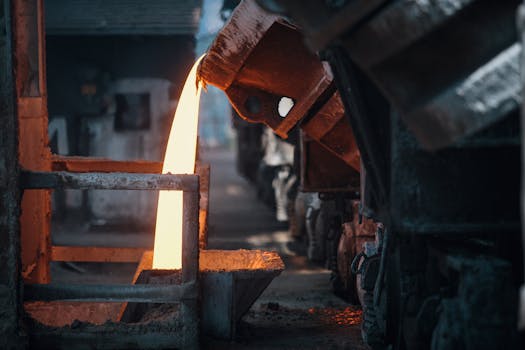
About Sand Casting
Sand casting is the oldest and most widely used casting process, accounting for approximately 70% of all metal castings worldwide. Molten metal is poured into a mold made of sand mixed with a bonding agent (clay, resin, or chemical binder). After the metal solidifies and cools, the sand mold is broken away to reveal the casting. Sand casting can produce parts from ounces to tons, in virtually any metal alloy, making it the most versatile casting process. It is ideal for low-to-medium volume production, large parts, and when a wide range of alloys is needed. Modern sand casting facilities use automated molding lines and 3D-printed sand molds for improved accuracy.
Tolerances
±0.015"-±0.030" (±0.4-0.8mm) standard; varies with size
Lead Time
2-8 weeks for patterns; 2-6 weeks for production
Cost Range
$500-$10,000 for patterns; $5-$500+ per part
Compatible Materials
Advantages
- Almost any metal can be cast
- Very large parts possible (tons)
- Low tooling costs vs. die casting
- Complex internal geometries with cores
- Suitable for all volumes
- 3D-printed sand molds for rapid prototyping
Limitations
- Rougher surface finish than die casting
- Wider tolerances than die casting
- Each mold is destroyed (expendable)
- Porosity and defects require inspection
- Secondary machining often needed
- Slower production rates
Industries Served
Automotive
The automotive industry manufactures vehicles and components, demanding high-volume production, consistent quality, and competitive pricing across a complex global supply chain.
Defense & Military
The defense industry manufactures weapons systems, vehicles, equipment, and components for military applications, requiring the highest security, reliability, and quality standards.
Oil & Gas
The oil and gas industry requires specialized manufacturing for drilling equipment, pipelines, valves, pumps, and refinery components that withstand extreme pressures and corrosive environments.
Construction
Construction manufacturing produces structural steel, rebar, building components, HVAC systems, and architectural elements for commercial and residential buildings.
Agriculture
Agricultural manufacturing produces tractors, harvesters, irrigation systems, and precision farming equipment that must withstand harsh outdoor conditions and heavy use.
Marine
Marine manufacturing produces vessels, propulsion systems, and offshore structures that must withstand saltwater corrosion, high loads, and demanding marine environments.
Sand Casting FAQ
How large of a part can be sand cast?
Sand casting can produce parts from a few ounces to over 100 tons. Very large castings include engine blocks, machine tool bases, ship propellers, and industrial pump housings. There is essentially no upper size limit for sand casting.
What is the surface finish of sand castings?
Standard sand casting surface finish is 250-500 Ra microinches (6-12 Ra μm). Shell molding and precision sand processes can achieve 125-250 Ra (3-6 Ra μm). Critical surfaces are typically machined after casting to achieve required finish and tolerances.
What is a sand casting pattern?
A pattern is a replica of the desired part (with allowances for shrinkage and machining) used to create the sand mold cavity. Patterns can be made from wood, plastic, or metal. Wood patterns are inexpensive for low volumes; metal patterns are durable for production.
How does 3D-printed sand molding work?
3D-printed sand molds use binder jetting technology to build sand molds and cores directly from CAD data without patterns. This eliminates pattern costs, reduces lead time to days, and enables complex geometries impossible with traditional patterns.
When should I choose sand casting over die casting?
Choose sand casting for low volumes (<5,000 parts), large parts, ferrous metals (iron, steel), or when tooling budget is limited. Choose die casting for high volumes, aluminum/zinc parts requiring tight tolerances and thin walls. Sand casting is more versatile but less precise.
Need More Sand Casting Customers?
Tell us about your manufacturing capabilities and we'll show you exactly how to attract qualified buyers. No obligation.
Tell Us About Your Sand Casting Needs →