Plasma Cutting Services | Find Qualified Manufacturers
Plasma cutting uses a superheated ionized gas jet to cut through electrically conductive metals quickly and economically, especially for thick steel and structural applications.
About Plasma Cutting
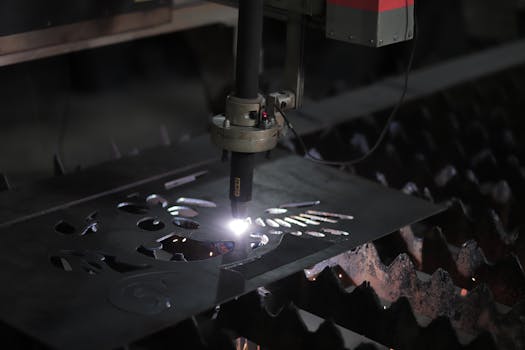
Plasma cutting is a thermal cutting process that uses a jet of ionized gas (plasma) at temperatures up to 30,000°F to melt and sever electrically conductive metals. The plasma arc is created by forcing gas (nitrogen, oxygen, argon, or air) through a narrow nozzle while an electrical arc ionizes the gas. Modern CNC plasma cutting systems with high-definition (HD) plasma torches can produce cut quality approaching laser cutting at lower cost for materials above 0.25" thick. Plasma cutting is the workhorse of structural steel fabrication, heavy equipment manufacturing, and shipbuilding.
Tolerances
±0.015" (±0.4mm) standard; ±0.005" with HD plasma
Lead Time
1-5 business days for cutting; 1-3 weeks for production
Cost Range
$0.50-$30 per part; very economical for thick steel
Compatible Materials
Advantages
- Fast cutting of thick metals
- Lower cost than laser for thick material
- Cuts conductive metals up to 6"+ thick
- High-definition plasma rivals laser quality
- Lower equipment cost than laser
- Effective on rusty or painted surfaces
Limitations
- Only cuts electrically conductive metals
- Heat-affected zone present
- Less precise than laser for thin materials
- Wider kerf than laser
- Edge quality decreases with thickness
- Noise and fume generation
Industries Served
Automotive
The automotive industry manufactures vehicles and components, demanding high-volume production, consistent quality, and competitive pricing across a complex global supply chain.
Defense & Military
The defense industry manufactures weapons systems, vehicles, equipment, and components for military applications, requiring the highest security, reliability, and quality standards.
Oil & Gas
The oil and gas industry requires specialized manufacturing for drilling equipment, pipelines, valves, pumps, and refinery components that withstand extreme pressures and corrosive environments.
Construction
Construction manufacturing produces structural steel, rebar, building components, HVAC systems, and architectural elements for commercial and residential buildings.
Agriculture
Agricultural manufacturing produces tractors, harvesters, irrigation systems, and precision farming equipment that must withstand harsh outdoor conditions and heavy use.
Marine
Marine manufacturing produces vessels, propulsion systems, and offshore structures that must withstand saltwater corrosion, high loads, and demanding marine environments.
Plasma Cutting FAQ
How thick can plasma cut?
Plasma cutting can sever steel up to 6" thick or more with high-amperage systems. Quality cutting (smooth edges, tight tolerances) is typically achieved on material from 0.25" to 2" thick. For material under 0.25", laser cutting is usually preferred.
What is the difference between plasma and laser cutting?
Laser cutting offers higher precision and better edge quality on thin materials (<0.5"). Plasma cutting is faster and more economical on thick materials (>0.5"), has lower equipment costs, and can cut through surface contaminants. Many shops use both technologies.
What is high-definition plasma cutting?
High-definition (HD) plasma uses a more constricted arc with higher energy density, producing cut quality that approaches laser cutting. HD plasma achieves tolerances of ±0.005" and smooth, nearly dross-free edges on material up to 1" thick.
Can plasma cut aluminum and stainless steel?
Yes, plasma cuts all electrically conductive metals including aluminum, stainless steel, copper, and brass. Different gas mixtures are optimized for each material — nitrogen/hydrogen for stainless, nitrogen for aluminum, oxygen for carbon steel.
Is plasma cutting safe?
Plasma cutting requires proper safety measures including eye protection (shade 8-10), hearing protection, ventilation or fume extraction, and fire prevention. CNC plasma tables with downdraft or water tables significantly improve safety by capturing fumes and sparks.
Need More Plasma Cutting Customers?
Tell us about your manufacturing capabilities and we'll show you exactly how to attract qualified buyers. No obligation.
Tell Us About Your Plasma Cutting Needs →