Laser Cutting — Connect with Top Providers
Laser cutting uses a focused, high-powered laser beam to cut through metals, plastics, and other materials with extreme precision, speed, and minimal material waste.
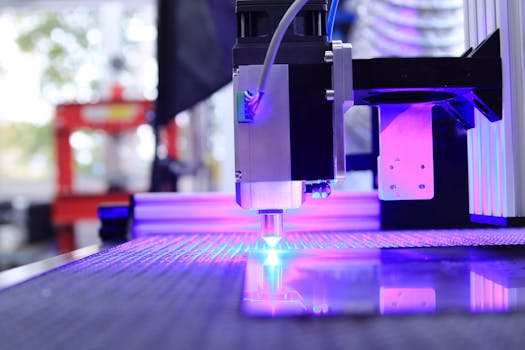
About Laser Cutting
Laser cutting is a technology that uses a focused laser beam to cut materials with high precision. The laser beam is generated by a laser source and directed through a beam path and focusing lens onto the material surface. The focused beam melts, burns, or vaporizes the material, while a high-pressure gas jet (typically nitrogen or oxygen) blows the molten material away, creating a clean, narrow cut (kerf). Modern fiber lasers can cut steel up to 1" thick and aluminum up to 0.75" thick at high speeds with excellent edge quality. Laser cutting is the go-to process for precision flat pattern cutting in most metal fabrication shops.
Tolerances
±0.003" (±0.08mm) standard; ±0.001" achievable
Lead Time
1-5 business days for simple cuts; 1-3 weeks for complex orders
Cost Range
$0.50-$50 per part depending on complexity and material
Compatible Materials
Advantages
- Extreme precision and speed
- No tooling required
- Minimal material waste (narrow kerf)
- Clean edges often require no deburring
- Complex shapes and fine details
- Fast turnaround for prototypes
Limitations
- Material thickness limitations (typically <1" for steel)
- Reflective metals (copper, brass) challenging for CO2 lasers
- Heat-affected zone can affect material properties
- Initial equipment cost is high
- Flat parts only (2D cutting)
Industries Served
Aerospace
The aerospace industry manufactures aircraft, spacecraft, satellites, and related components requiring the highest standards of precision, quality, and reliability.
Automotive
The automotive industry manufactures vehicles and components, demanding high-volume production, consistent quality, and competitive pricing across a complex global supply chain.
Medical Devices
The medical device industry manufactures instruments, implants, diagnostics, and equipment that must meet stringent regulatory requirements for safety and biocompatibility.
Electronics
The electronics manufacturing industry produces circuit boards, components, enclosures, and assemblies for computing, communications, industrial controls, and consumer devices.
Construction
Construction manufacturing produces structural steel, rebar, building components, HVAC systems, and architectural elements for commercial and residential buildings.
Consumer Products
Consumer products manufacturing produces household goods, appliances, sporting equipment, and personal items through high-volume processes prioritizing aesthetics and cost efficiency.
Laser Cutting FAQ
What is the difference between fiber laser and CO2 laser cutting?
Fiber lasers use optical fiber as the gain medium and excel at cutting thin to medium metals with high speed and energy efficiency. CO2 lasers use gas as the medium and are better for cutting non-metals (acrylic, wood, fabric) and thick metals. Fiber lasers have largely replaced CO2 for metal cutting.
How thick can a laser cut through metal?
Modern fiber lasers can cut steel up to 1-1.5" thick, stainless steel up to 1", and aluminum up to 0.75". CO2 lasers can cut steel up to 1". The maximum thickness depends on laser power (typically 4kW-15kW) and material.
Is laser cutting better than waterjet cutting?
Laser cutting is faster and more precise for thin to medium metals. Waterjet cutting handles thicker materials, has no heat-affected zone, and cuts a wider range of materials (stone, glass, composites). The choice depends on material, thickness, and precision requirements.
How fast is laser cutting?
Laser cutting speeds vary dramatically based on material and thickness. Cutting 1mm steel, a fiber laser can travel at 1,000+ inches per minute. For 12mm steel, speeds drop to around 60-100 inches per minute. Thin aluminum can be cut at over 2,000 inches per minute.
Does laser cutting cause warping?
Laser cutting generates localized heat that can cause warping in thin materials or parts with large cut areas relative to material thickness. Proper programming (optimized cutting order, reduced power) and fixturing minimize warping. Waterjet cutting avoids heat-related distortion entirely.
Need More Laser Cutting Customers?
Tell us about your manufacturing capabilities and we'll show you exactly how to attract qualified buyers. No obligation.
Tell Us About Your Laser Cutting Needs →