Professional Investment Casting Services for Your Business
Investment casting (lost-wax casting) produces complex, precision metal parts by creating a wax pattern, coating it in ceramic, and replacing the wax with molten metal.
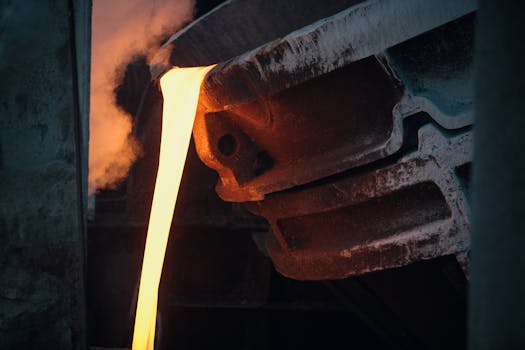
About Investment Casting
Investment casting, also known as lost-wax casting, is a precision casting process with origins dating back over 5,000 years. The process begins with creating a wax pattern that is a replica of the desired part. The wax pattern is coated with ceramic slurry that hardens into a shell mold. The wax is then melted out (hence 'lost wax'), and molten metal is poured into the ceramic shell. After cooling, the ceramic is broken away to reveal a near-net-shape casting with excellent surface finish and dimensional accuracy. Investment casting is the process of choice for complex, high-precision parts in aerospace (turbine blades), medical (orthopedic implants), and defense applications.
Tolerances
±0.005" per inch (±0.13mm per 25mm); ±0.003" achievable
Lead Time
4-10 weeks for first articles; 4-8 weeks for production
Cost Range
$1,000-$15,000 for tooling; $10-$200+ per part
Compatible Materials
Advantages
- Excellent surface finish as-cast
- Tight tolerances for a casting process
- Complex geometries including undercuts
- Wide range of alloys
- Near-net shape reduces machining
- No parting line or flash
Limitations
- Higher per-part cost than sand or die casting
- Longer production times
- Part size limited (typically under 50 lbs)
- Wax pattern tooling required
- Not suited for very high volumes vs. die casting
Industries Served
Aerospace
The aerospace industry manufactures aircraft, spacecraft, satellites, and related components requiring the highest standards of precision, quality, and reliability.
Automotive
The automotive industry manufactures vehicles and components, demanding high-volume production, consistent quality, and competitive pricing across a complex global supply chain.
Medical Devices
The medical device industry manufactures instruments, implants, diagnostics, and equipment that must meet stringent regulatory requirements for safety and biocompatibility.
Defense & Military
The defense industry manufactures weapons systems, vehicles, equipment, and components for military applications, requiring the highest security, reliability, and quality standards.
Oil & Gas
The oil and gas industry requires specialized manufacturing for drilling equipment, pipelines, valves, pumps, and refinery components that withstand extreme pressures and corrosive environments.
Investment Casting FAQ
What is the maximum size for investment castings?
Investment castings typically range from a fraction of an ounce to about 50 pounds. Some foundries can produce castings up to 150 pounds. For larger parts, sand casting or other processes are more practical.
Why is investment casting used for aerospace?
Aerospace relies on investment casting for turbine blades, structural components, and complex airframe parts because it produces near-net-shape parts in high-performance alloys (Inconel, titanium) with tight tolerances, reducing the need for extensive machining of expensive materials.
How does investment casting surface finish compare?
Investment casting typically achieves surface finishes of 63-125 Ra microinches (1.6-3.2 Ra μm) as-cast, which is significantly smoother than sand casting (250-500 Ra) and comparable to some machined surfaces. Many investment castings require no surface finishing.
What is the typical lead time for investment casting?
First article castings typically take 4-10 weeks including tooling. Production orders take 4-8 weeks. Rapid prototyping with 3D-printed wax patterns can produce first castings in 1-2 weeks without tooling investment.
Is investment casting suitable for medical implants?
Yes, investment casting is widely used for orthopedic implants (hip, knee, shoulder), dental implants, and surgical instruments. It produces biocompatible cobalt-chrome and titanium parts with the complex geometries and smooth surfaces required for implantable devices.
Need More Investment Casting Customers?
Tell us about your manufacturing capabilities and we'll show you exactly how to attract qualified buyers. No obligation.
Tell Us About Your Investment Casting Needs →