Injection Molding — Connect with Top Providers
Injection molding forces molten plastic into a mold cavity under high pressure, producing complex plastic parts at very high volumes with excellent consistency and low per-part cost.
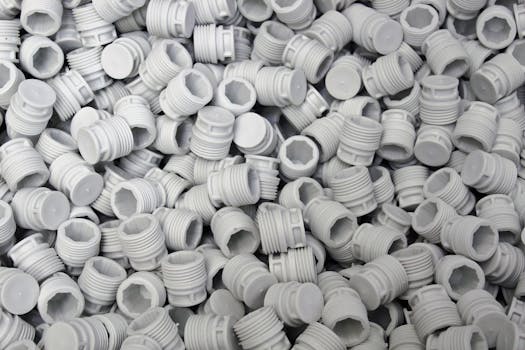
About Injection Molding
Injection molding is a manufacturing process for producing parts by injecting molten material into a mold. It is most commonly performed with thermoplastic and thermosetting polymers. Granular plastic is fed from a hopper into a heated barrel where it is melted, then forced under high pressure (typically 10,000-30,000 PSI) into a mold cavity. The material cools and solidifies into the shape of the cavity. Injection molding is the most common method for manufacturing plastic parts, producing billions of parts per year worldwide. It is ideal for high-volume production where tooling costs are amortized over large quantities.
Tolerances
±0.002" (±0.05mm) standard; ±0.001" achievable with precision molds
Lead Time
4-12 weeks for tooling; 1-4 weeks for production after tooling
Cost Range
$5,000-$100,000+ for tooling; $0.10-$10 per part in production
Compatible Materials
Advantages
- Very low per-part cost at volume
- Excellent part consistency and repeatability
- Complex geometries with fine detail
- Wide material selection
- Minimal post-processing required
- High production rates (seconds per part)
Limitations
- High upfront tooling costs
- Long lead time for mold fabrication
- Design changes after tooling are expensive
- Not economical for low volumes
- Wall thickness limitations
- Undercuts require side actions or lifters
Industries Served
Aerospace
The aerospace industry manufactures aircraft, spacecraft, satellites, and related components requiring the highest standards of precision, quality, and reliability.
Automotive
The automotive industry manufactures vehicles and components, demanding high-volume production, consistent quality, and competitive pricing across a complex global supply chain.
Medical Devices
The medical device industry manufactures instruments, implants, diagnostics, and equipment that must meet stringent regulatory requirements for safety and biocompatibility.
Electronics
The electronics manufacturing industry produces circuit boards, components, enclosures, and assemblies for computing, communications, industrial controls, and consumer devices.
Packaging
The packaging industry manufactures containers, closures, films, and machinery for food, consumer products, pharmaceutical, and industrial packaging applications.
Consumer Products
Consumer products manufacturing produces household goods, appliances, sporting equipment, and personal items through high-volume processes prioritizing aesthetics and cost efficiency.
Injection Molding FAQ
How many parts before injection molding is cost-effective?
Injection molding typically becomes cost-effective at volumes above 1,000-5,000 parts, depending on part complexity and tooling cost. For very simple molds, break-even can occur at a few hundred parts. For complex molds costing $50,000+, volumes of 10,000+ are usually needed.
How long does it take to make an injection mold?
Simple single-cavity molds take 4-6 weeks. Complex multi-cavity molds with side actions and precision requirements take 8-16 weeks. Rapid tooling options (aluminum molds) can be ready in 2-3 weeks for prototyping and low-volume production.
What plastics can be injection molded?
Most thermoplastics can be injection molded including ABS, Polypropylene, Polyethylene, Nylon, Polycarbonate, Acetal, PEEK, PPS, TPU, and many more. Some thermosets and elastomers (silicone rubber) can also be injection molded with modified processes.
What is the typical cycle time for injection molding?
Cycle times range from a few seconds for small thin-walled parts to 30-60 seconds for larger thick-walled parts. A typical cycle for a medium-complexity part is 15-30 seconds, including injection, cooling, and ejection.
Can injection molding produce metal parts?
Metal Injection Molding (MIM) is a specialized process that combines injection molding with powdered metallurgy to produce small, complex metal parts. MIM parts are sintered after molding to achieve near-full density. It's used for medical, firearms, and automotive components.
Need More Injection Molding Customers?
Tell us about your manufacturing capabilities and we'll show you exactly how to attract qualified buyers. No obligation.
Tell Us About Your Injection Molding Needs →