Forging Solutions for Charlotte Manufacturers
Find top Forging services in Charlotte, North Carolina. Connect with qualified manufacturers ready to handle your project with precision and efficiency.
Find Forging Buyers in Charlotte →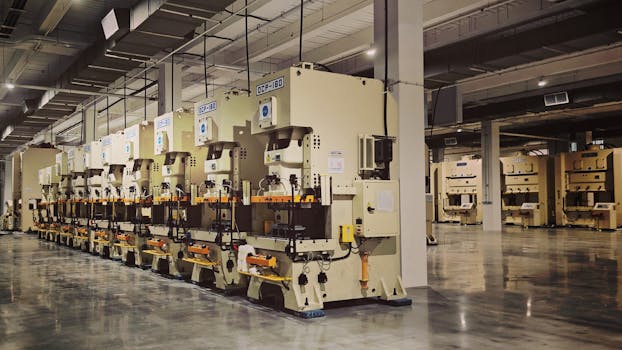
Why Charlotte for Forging?
36,000
Manufacturing Workers
1,500
Manufacturing Facilities
874,579
City Population
Charlotte, North Carolina is part of the Charlotte-Concord-Gastonia metro area and is home to major manufacturers including Siemens Energy, Honeywell, Continental. The Southeast region offers a strong manufacturing base making it an ideal location for forging services.
Forging Capabilities
Forging is a manufacturing process that shapes metal using localized compressive forces delivered by hammers, presses, or rollers. The metal is typically heated (hot forging) to improve formability, though cold forging is used for some applications. Forging refines the grain structure of the metal, orienting grain flow to follow the part's contours, which significantly improves strength, toughness, and fatigue resistance compared to cast or machined parts. Types include open-die forging (for large simple shapes), closed-die (impression die) forging (for complex shapes), ring rolling, and precision forging. Forged components are critical in applications where failure is not an option: aerospace, automotive, oil and gas, and defense.
±0.010"-±0.030" as-forged; machined to final dimensions
4-12 weeks for dies; 4-8 weeks for production
$5,000-$100,000+ for dies; $5-$500+ per part
Industries Using Forging in Charlotte
Aerospace
The aerospace industry manufactures aircraft, spacecraft, satellites, and related components requiring the highest standards of precision, quality, and reliability.
Automotive
The automotive industry manufactures vehicles and components, demanding high-volume production, consistent quality, and competitive pricing across a complex global supply chain.
Major Manufacturers in Charlotte
Key employers in the Charlotte manufacturing sector include:
- Siemens Energy
- Honeywell
- Continental
Forging in Charlotte — FAQ
How many Forging providers are in Charlotte, NC?
The Charlotte-Concord-Gastonia metropolitan area has approximately 1,500 manufacturing establishments, many of which offer forging services. The area employs about 36,000 manufacturing workers, ensuring a skilled workforce for your project.
Why are forged parts stronger than cast or machined parts?
Forging refines and orients the metal's grain structure along the part's contours, creating a fibrous grain flow that maximizes strength in the direction of stress. Cast parts have random grain structure with potential porosity. Machined parts cut across the grain. Forged parts can be 20-50% stronger.
What is the difference between open-die and closed-die forging?
Open-die forging uses flat or simple-shaped dies and repeated blows to shape the metal, suitable for large simple shapes (shafts, rings, blocks). Closed-die (impression die) forging uses precisely machined dies to form complex near-net shapes in a single operation, suitable for production.
How large of a part can be forged?
Open-die forging can produce parts weighing over 100 tons — including large ship shafts, power generation rotors, and pressure vessel components. Closed-die forgings typically range from ounces to a few hundred pounds. Ring rolling produces seamless rings up to 30 feet in diameter.
What industries use forged components?
Aerospace (landing gear, turbine disks), automotive (crankshafts, connecting rods), oil and gas (valves, fittings), defense (ordnance, armor), construction (structural hardware), and energy (turbine shafts) all rely on forged components where strength and reliability are critical.
Need Forging Leads in Charlotte?
Tell us about your manufacturing capabilities and we'll show you exactly how to attract qualified buyers. No obligation.
Get Charlotte Forging Leads →