Forging Services | Find Qualified Manufacturers
Forging shapes heated metal using compressive force from hammers or presses, producing parts with superior strength, grain structure, and fatigue resistance.
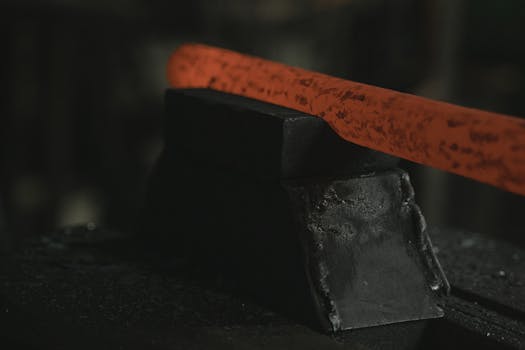
About Forging
Forging is a manufacturing process that shapes metal using localized compressive forces delivered by hammers, presses, or rollers. The metal is typically heated (hot forging) to improve formability, though cold forging is used for some applications. Forging refines the grain structure of the metal, orienting grain flow to follow the part's contours, which significantly improves strength, toughness, and fatigue resistance compared to cast or machined parts. Types include open-die forging (for large simple shapes), closed-die (impression die) forging (for complex shapes), ring rolling, and precision forging. Forged components are critical in applications where failure is not an option: aerospace, automotive, oil and gas, and defense.
Tolerances
±0.010"-±0.030" as-forged; machined to final dimensions
Lead Time
4-12 weeks for dies; 4-8 weeks for production
Cost Range
$5,000-$100,000+ for dies; $5-$500+ per part
Compatible Materials
Advantages
- Superior mechanical properties
- Oriented grain flow for maximum strength
- Excellent fatigue resistance
- Can produce near-net shapes
- Wide range of materials and sizes
- Cost-effective at medium-to-high volumes
Limitations
- High tooling costs for closed-die forging
- Limited to relatively simple shapes
- Secondary machining usually required
- Material waste from flash
- Not economical for low volumes (closed-die)
Industries Served
Aerospace
The aerospace industry manufactures aircraft, spacecraft, satellites, and related components requiring the highest standards of precision, quality, and reliability.
Automotive
The automotive industry manufactures vehicles and components, demanding high-volume production, consistent quality, and competitive pricing across a complex global supply chain.
Defense & Military
The defense industry manufactures weapons systems, vehicles, equipment, and components for military applications, requiring the highest security, reliability, and quality standards.
Oil & Gas
The oil and gas industry requires specialized manufacturing for drilling equipment, pipelines, valves, pumps, and refinery components that withstand extreme pressures and corrosive environments.
Construction
Construction manufacturing produces structural steel, rebar, building components, HVAC systems, and architectural elements for commercial and residential buildings.
Marine
Marine manufacturing produces vessels, propulsion systems, and offshore structures that must withstand saltwater corrosion, high loads, and demanding marine environments.
Forging FAQ
Why are forged parts stronger than cast or machined parts?
Forging refines and orients the metal's grain structure along the part's contours, creating a fibrous grain flow that maximizes strength in the direction of stress. Cast parts have random grain structure with potential porosity. Machined parts cut across the grain. Forged parts can be 20-50% stronger.
What is the difference between open-die and closed-die forging?
Open-die forging uses flat or simple-shaped dies and repeated blows to shape the metal, suitable for large simple shapes (shafts, rings, blocks). Closed-die (impression die) forging uses precisely machined dies to form complex near-net shapes in a single operation, suitable for production.
How large of a part can be forged?
Open-die forging can produce parts weighing over 100 tons — including large ship shafts, power generation rotors, and pressure vessel components. Closed-die forgings typically range from ounces to a few hundred pounds. Ring rolling produces seamless rings up to 30 feet in diameter.
What industries use forged components?
Aerospace (landing gear, turbine disks), automotive (crankshafts, connecting rods), oil and gas (valves, fittings), defense (ordnance, armor), construction (structural hardware), and energy (turbine shafts) all rely on forged components where strength and reliability are critical.
Is forging environmentally friendly?
Forging is relatively material-efficient compared to machining from solid stock, with 60-90% material utilization for closed-die forgings. Flash and scrap are fully recyclable. The energy intensity is moderate — less than casting per pound of finished product.
Need More Forging Customers?
Tell us about your manufacturing capabilities and we'll show you exactly how to attract qualified buyers. No obligation.
Tell Us About Your Forging Needs →