Die Casting — Connect with Top Providers
Die casting forces molten metal under high pressure into reusable steel molds to produce complex, dimensionally accurate parts at very high volumes.
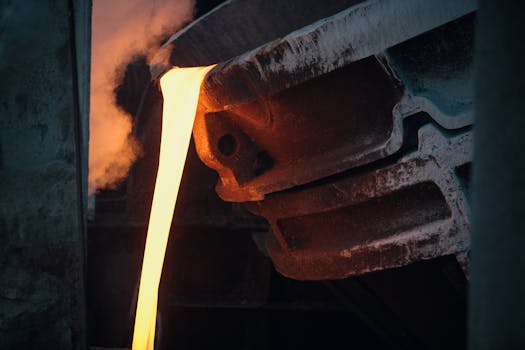
About Die Casting
Die casting is a metal casting process that forces molten metal under high pressure (1,500-30,000 PSI) into steel mold cavities (dies). The dies are precisely machined to produce complex shapes with excellent dimensional accuracy and surface finish. There are two main methods: hot chamber die casting (for zinc, magnesium, and low-melting-point alloys) and cold chamber die casting (for aluminum, brass, and higher-melting-point alloys). Die casting produces parts with thin walls, complex geometries, and fine surface detail at production rates of hundreds per hour. It is one of the most cost-effective processes for high-volume production of metal parts.
Tolerances
±0.002"-±0.005" depending on size; ±0.001" for critical features with secondary machining
Lead Time
8-16 weeks for tooling; 2-4 weeks for production
Cost Range
$10,000-$200,000+ for tooling; $0.50-$20 per part in production
Compatible Materials
Advantages
- High production rates
- Excellent dimensional accuracy
- Complex thin-walled shapes
- Good surface finish as-cast
- Near-net shape reduces machining
- Long die life (100,000+ shots for aluminum)
Limitations
- Very high tooling costs
- Limited alloy selection
- Porosity can be an issue
- Not economical for low volumes
- Part size limited by machine tonnage
- Design changes require new tooling
Industries Served
Aerospace
The aerospace industry manufactures aircraft, spacecraft, satellites, and related components requiring the highest standards of precision, quality, and reliability.
Automotive
The automotive industry manufactures vehicles and components, demanding high-volume production, consistent quality, and competitive pricing across a complex global supply chain.
Defense & Military
The defense industry manufactures weapons systems, vehicles, equipment, and components for military applications, requiring the highest security, reliability, and quality standards.
Electronics
The electronics manufacturing industry produces circuit boards, components, enclosures, and assemblies for computing, communications, industrial controls, and consumer devices.
Telecommunications
Telecommunications manufacturing produces network infrastructure, antennas, fiber optic equipment, and electronic components for global communications systems.
Consumer Products
Consumer products manufacturing produces household goods, appliances, sporting equipment, and personal items through high-volume processes prioritizing aesthetics and cost efficiency.
Die Casting FAQ
What metals can be die cast?
The most commonly die cast metals are aluminum alloys (65% of market), zinc alloys (30%), and magnesium alloys (5%). Aluminum die castings offer the best combination of light weight, strength, and corrosion resistance. Zinc provides excellent detail and lower tooling costs.
How many parts can a die casting die produce?
Die life depends on the metal being cast. Zinc dies can last 1,000,000+ shots. Aluminum dies typically last 100,000-300,000 shots. Brass and copper dies may last only 10,000-50,000 shots due to higher casting temperatures.
What is the minimum volume for die casting?
Due to high tooling costs ($10,000-$200,000+), die casting is typically economical at volumes above 5,000-10,000 parts. For lower volumes, sand casting, investment casting, or CNC machining may be more cost-effective.
Can die castings be welded?
Standard die castings are difficult to weld due to porosity from trapped gases. Vacuum die casting and squeeze casting produce denser parts that can be welded. For weldable applications, these specialized processes or alternative casting methods should be considered.
What surface finishes are available for die castings?
Die castings can be powder coated, wet painted, plated (chrome, nickel, zinc), anodized (aluminum), e-coated, or used as-cast with a smooth surface. Decorative chrome plating on zinc die castings is very common for automotive and consumer products.
Need More Die Casting Customers?
Tell us about your manufacturing capabilities and we'll show you exactly how to attract qualified buyers. No obligation.
Tell Us About Your Die Casting Needs →