CNC Milling Services | Find Qualified Manufacturers
CNC milling uses rotating multi-point cutting tools to remove material from a workpiece, creating complex flat surfaces, slots, pockets, and 3D contours with high precision.
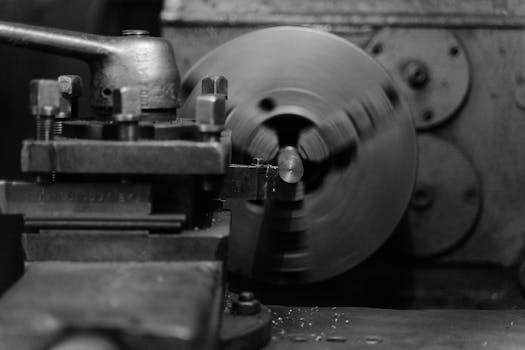
About CNC Milling
CNC milling is a machining process that uses rotating cutting tools to remove material from a stationary workpiece. The cutting tool moves along multiple axes (typically 3, 4, or 5) to create complex three-dimensional shapes. CNC mills can perform face milling, peripheral milling, slot cutting, pocket milling, drilling, boring, reaming, and contouring. Modern CNC milling centers feature automatic tool changers with magazines holding 20-120+ tools, enabling complex parts to be completed in a single setup. This versatility makes CNC milling the backbone of precision manufacturing.
Tolerances
±0.001" (±0.025mm) standard; ±0.0005" achievable with HSM
Lead Time
3-12 business days for prototypes; 4-8 weeks for production
Cost Range
$75-$600 per part for prototypes; volume pricing varies
Compatible Materials
Advantages
- Versatile for complex 3D shapes
- Excellent surface finish
- Wide range of materials
- Precise pocket and slot features
- Automatic tool changing for efficiency
- Scalable from prototype to production
Limitations
- Higher cost than turning for simple round parts
- Fixturing can be complex for irregular shapes
- Tool wear management required
- Material waste in subtractive process
- Undercuts require special tooling or 5-axis
Industries Served
Aerospace
The aerospace industry manufactures aircraft, spacecraft, satellites, and related components requiring the highest standards of precision, quality, and reliability.
Automotive
The automotive industry manufactures vehicles and components, demanding high-volume production, consistent quality, and competitive pricing across a complex global supply chain.
Medical Devices
The medical device industry manufactures instruments, implants, diagnostics, and equipment that must meet stringent regulatory requirements for safety and biocompatibility.
Defense & Military
The defense industry manufactures weapons systems, vehicles, equipment, and components for military applications, requiring the highest security, reliability, and quality standards.
Electronics
The electronics manufacturing industry produces circuit boards, components, enclosures, and assemblies for computing, communications, industrial controls, and consumer devices.
Consumer Products
Consumer products manufacturing produces household goods, appliances, sporting equipment, and personal items through high-volume processes prioritizing aesthetics and cost efficiency.
CNC Milling FAQ
What is CNC milling best used for?
CNC milling excels at creating parts with flat surfaces, complex pockets, slots, holes, and 3D contoured surfaces. Common applications include engine blocks, mold tooling, brackets, housings, and precision components for aerospace and medical devices.
What is the difference between 3-axis and 5-axis milling?
3-axis milling moves the cutting tool in X, Y, and Z directions, suitable for most flat and moderately complex parts. 5-axis milling adds two rotational axes, allowing the tool to approach the workpiece from virtually any direction, enabling complex contours, undercuts, and single-setup machining of multi-sided parts.
How thick of material can a CNC mill cut?
CNC mills can cut through materials of virtually any thickness, limited only by the machine's travel range. Typical vertical mills handle workpieces up to 20-30 inches in height. Large gantry mills can machine parts several feet thick.
What size parts can be CNC milled?
CNC milling machines range from benchtop units for small parts (a few inches) to large gantry mills that can machine parts 20+ feet long. Most job shops handle parts from a fraction of an inch up to several feet in any dimension.
Can CNC milling create threads?
Yes, CNC mills can create threads using thread milling (helical interpolation) or tapping cycles. Thread milling offers advantages over tapping including the ability to create different thread sizes with one tool and easier chip evacuation in blind holes.
Need More CNC Milling Customers?
Tell us about your manufacturing capabilities and we'll show you exactly how to attract qualified buyers. No obligation.
Tell Us About Your CNC Milling Needs →