Professional CNC Machining Services for Your Business
Computer Numerical Control machining uses programmed commands to control cutting tools that shape metal and plastic parts with extreme precision. It is one of the most versatile and widely used manufacturing processes in the world.
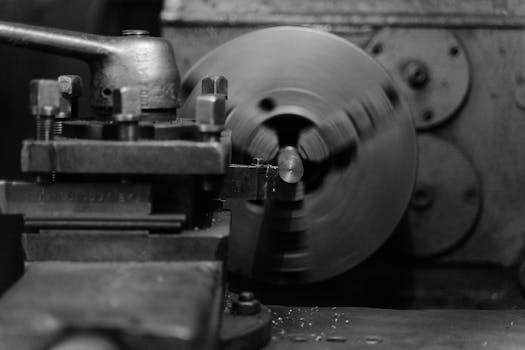
About CNC Machining
CNC machining is a subtractive manufacturing process where pre-programmed computer software dictates the movement of factory tools and machinery. The process can control a range of complex machinery, from grinders and lathes to mills and routers. With CNC machining, three-dimensional cutting tasks can be accomplished in a single set of prompts. CNC machines offer exceptional repeatability, typically holding tolerances of ±0.001 inches or tighter, making them ideal for both prototyping and high-volume production across industries like aerospace, automotive, medical devices, and defense.
Tolerances
±0.001" (±0.025mm) standard; ±0.0005" (±0.013mm) achievable
Lead Time
3-15 business days for prototypes; 4-8 weeks for production
Cost Range
$50-$500+ per part for prototypes; volume pricing significantly lower
Compatible Materials
Advantages
- Extreme precision and repeatability
- Wide material compatibility
- Suitable for both prototyping and production
- Complex geometries achievable
- Excellent surface finishes
- Highly automated with minimal human error
Limitations
- Material waste from subtractive process
- Higher cost for very simple parts vs. stamping
- Setup costs for small batches
- Limited for very large parts
- Internal features can be challenging
Industries Served
Aerospace
The aerospace industry manufactures aircraft, spacecraft, satellites, and related components requiring the highest standards of precision, quality, and reliability.
Automotive
The automotive industry manufactures vehicles and components, demanding high-volume production, consistent quality, and competitive pricing across a complex global supply chain.
Medical Devices
The medical device industry manufactures instruments, implants, diagnostics, and equipment that must meet stringent regulatory requirements for safety and biocompatibility.
Defense & Military
The defense industry manufactures weapons systems, vehicles, equipment, and components for military applications, requiring the highest security, reliability, and quality standards.
Oil & Gas
The oil and gas industry requires specialized manufacturing for drilling equipment, pipelines, valves, pumps, and refinery components that withstand extreme pressures and corrosive environments.
Electronics
The electronics manufacturing industry produces circuit boards, components, enclosures, and assemblies for computing, communications, industrial controls, and consumer devices.
CNC Machining FAQ
What is CNC machining used for?
CNC machining is used to create precision parts for aerospace, automotive, medical, defense, and electronics industries. It produces everything from engine components and surgical instruments to electronic enclosures and custom fixtures.
How accurate is CNC machining?
Standard CNC machining achieves tolerances of ±0.001 inches (±0.025mm). High-precision CNC operations can hold tolerances as tight as ±0.0002 inches (±0.005mm) with specialized equipment.
What materials can be CNC machined?
CNC machines work with most metals including aluminum, steel, stainless steel, titanium, brass, and copper. They also machine plastics like Delrin, Nylon, PEEK, and Polycarbonate. Some machines can handle composites and ceramics.
How much does CNC machining cost?
CNC machining costs depend on material, complexity, tolerances, and volume. Prototype parts typically range from $50-$500+. Production volumes benefit from significantly lower per-part costs, often $5-$50 per part depending on complexity.
What is the difference between CNC machining and 3D printing?
CNC machining is a subtractive process that removes material from a solid block, offering superior surface finish, tighter tolerances, and better material properties. 3D printing is an additive process that builds parts layer by layer, excelling at complex internal geometries and rapid prototyping with less material waste.
Need More CNC Machining Customers?
Tell us about your manufacturing capabilities and we'll show you exactly how to attract qualified buyers. No obligation.
Tell Us About Your CNC Machining Needs →