Leading Manufacturing Services for Robotics
Robotics manufacturing produces industrial robots, collaborative robots, autonomous systems, and specialized robotic components for automation across all industries.
Required Certifications
Key Industry Challenges
Manufacturing Processes for Robotics
CNC Machining
Computer Numerical Control machining uses programmed commands to control cutting tools that shape metal and plastic parts with extreme precision. It is one of the most versatile and widely used manufacturing processes in the world.
5-Axis Machining
5-axis machining moves a cutting tool along five axes simultaneously, enabling the creation of extremely complex parts in a single setup with superior precision and surface quality.
Injection Molding
Injection molding forces molten plastic into a mold cavity under high pressure, producing complex plastic parts at very high volumes with excellent consistency and low per-part cost.
Sheet Metal Fabrication
Sheet metal fabrication combines cutting, bending, and assembly operations to transform flat sheets into enclosures, brackets, panels, and structural components.
Laser Cutting
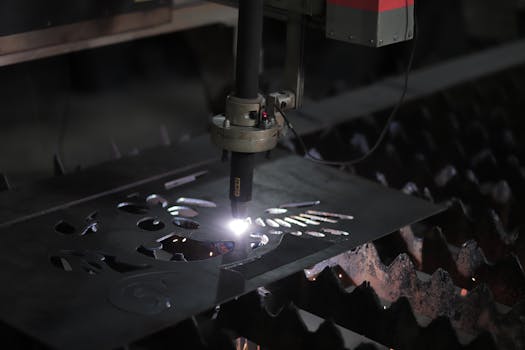
Laser cutting uses a focused, high-powered laser beam to cut through metals, plastics, and other materials with extreme precision, speed, and minimal material waste.
Die Casting
Die casting forces molten metal under high pressure into reusable steel molds to produce complex, dimensionally accurate parts at very high volumes.
3D Printing / Additive Manufacturing
3D printing builds parts layer by layer from digital models, enabling rapid prototyping, complex geometries, and on-demand production without traditional tooling.
Anodizing
Anodizing creates a controlled oxide layer on aluminum parts through an electrochemical process, providing excellent corrosion resistance, wear resistance, and color options.
Wire EDM
Wire EDM uses a thin electrically charged wire to cut through conductive metals with extreme precision, producing intricate shapes and tight tolerances impossible for conventional machining.
Grinding
Grinding uses abrasive wheels to remove small amounts of material with extreme precision, achieving tight tolerances and superior surface finishes on hardened metals.
Robotics Manufacturing FAQ
What precision is needed for robot manufacturing?
Robot joints and gearboxes require tolerances of ±0.0005" or tighter. Harmonic drives and cycloidal reducers need sub-micron precision. Robot arms require careful machining for rigidity and repeatability. Typical robot repeatability is ±0.02-0.1mm.
What materials are used in robot manufacturing?
Aluminum alloys for lightweight arms and housings. Steel for bases and heavy-duty frames. Carbon fiber for high-performance lightweight links. Precision-ground steel for gears and shafts. Engineering plastics for covers and non-structural components.
What safety standards apply to collaborative robots?
ISO 10218-1/2 covers industrial robot safety. ISO/TS 15066 specifically addresses collaborative robot safety including power and force limiting, speed and separation monitoring, hand guiding, and safety-rated monitored stop functions.
Generate Robotics Manufacturing Leads
Tell us about your manufacturing capabilities and we'll show you exactly how to attract qualified buyers. No obligation.
Tell Us About Your Robotics Capabilities →