Leading Manufacturing Services for Construction
Construction manufacturing produces structural steel, rebar, building components, HVAC systems, and architectural elements for commercial and residential buildings.
Required Certifications
Key Industry Challenges
Manufacturing Processes for Construction
Metal Stamping
Metal stamping uses dies and presses to shape sheet metal into parts through bending, punching, embossing, and drawing operations at very high production rates.
Sheet Metal Fabrication
Sheet metal fabrication combines cutting, bending, and assembly operations to transform flat sheets into enclosures, brackets, panels, and structural components.
Laser Cutting
Laser cutting uses a focused, high-powered laser beam to cut through metals, plastics, and other materials with extreme precision, speed, and minimal material waste.
Plasma Cutting
Plasma cutting uses a superheated ionized gas jet to cut through electrically conductive metals quickly and economically, especially for thick steel and structural applications.
Welding & Assembly
Welding and assembly services join metal components through fusion welding, resistance welding, and mechanical assembly to create complete structures and products.
MIG Welding
MIG welding (GMAW) feeds a consumable wire electrode through a welding gun to produce fast, efficient welds on steel, aluminum, and other metals for production applications.
Powder Coating
Powder coating applies dry powder electrostatically to metal parts and cures it in an oven, creating a durable, uniform, environmentally friendly finish.
Extrusion
Extrusion forces heated metal or plastic through a shaped die to create long parts with consistent cross-sections like profiles, tubes, channels, and structural shapes.
Forging
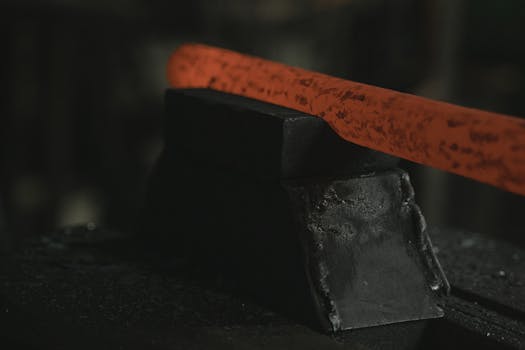
Forging shapes heated metal using compressive force from hammers or presses, producing parts with superior strength, grain structure, and fatigue resistance.
Tube Bending
Tube bending uses mandrels, dies, and CNC-controlled machines to form metal tubing into precise shapes for frames, exhaust systems, roll cages, and fluid transport.
Construction Manufacturing FAQ
What certifications are needed for structural steel fabrication?
AISC (American Institute of Steel Construction) certification is the primary standard for structural steel fabricators. Standard (STD) certification covers conventional steel buildings. Bridge (BRG) certification covers highway bridges. AWS D1.1 certification is required for structural welding.
What is modular construction and how does it affect manufacturing?
Modular construction builds sections of buildings in factories, then assembles them on-site. This shifts work from field construction to controlled manufacturing environments, improving quality, reducing waste, and shortening timelines. It requires factory-based fabrication capabilities.
What steel grades are used in construction?
A36 is the most common structural steel. A992 is specified for wide-flange beams. A500 is used for HSS (hollow structural sections). A572 Grade 50 provides higher strength. Weathering steel (A588/A242) resists atmospheric corrosion without painting.
Generate Construction Manufacturing Leads
Tell us about your manufacturing capabilities and we'll show you exactly how to attract qualified buyers. No obligation.
Tell Us About Your Construction Capabilities →