
Why Aftermarket Services Are the Untapped Goldmine for Manufacturing Lead Generation
Discover how aftermarket services deliver 2x higher margins and create predictable lead pipelines. Learn the strategies top manufacturers use in 2026.
Richard Kastl

The manufacturing sector is experiencing a seismic shift in how companies find and convert new business. According to Forbes, the use of agentic AI systems in manufacturing is predicted to quadruple by 2027. While most discussions focus on production floor applications, the real competitive advantage is emerging in an unexpected place: B2B lead generation.
Manufacturers who embrace agentic AI for their sales pipelines are reporting 3x improvements in qualified lead generation while reducing their cost per acquisition by up to 60%. Here is how this technology is reshaping the competitive landscape and what you need to know to stay ahead.
Traditional marketing automation follows rigid, predefined rules. You set up email sequences, define triggers, and hope your prospects fit neatly into your predetermined pathways. Agentic AI operates fundamentally differently.
These systems possess the ability to perceive their environment, make autonomous decisions, and take actions to achieve specific goals without constant human oversight. In the context of lead generation, this means AI agents that can:
The key distinction is autonomy. While traditional automation requires you to anticipate every scenario and pre-program responses, agentic AI can navigate novel situations, learn from interactions, and continuously optimize its approach.
Deloitte’s 2026 Manufacturing Industry Outlook highlights that manufacturers face an increasingly strained labor market, with immigrant workers filling nearly one in four US manufacturing production jobs in 2024. This labor shortage extends to sales and marketing teams, making autonomous AI agents not just a competitive advantage but a necessity.
The most immediate application is prospect identification. Agentic AI systems continuously scan industry publications, company announcements, regulatory filings, and social media to identify potential buyers. When a company announces a facility expansion, receives new funding, or shows signs of supply chain challenges, the AI agent flags them as potential prospects and initiates research.
One precision components manufacturer implemented an agentic prospecting system that monitors over 50 industry data sources. Within three months, they identified 340% more qualified prospects than their manual research process had in the previous year. The system recognized patterns that human researchers missed, such as correlations between certain equipment purchases and the need for specific component types.
Generic email templates are dead. Buyers in manufacturing procurement expect vendors to understand their specific challenges. Agentic AI systems excel at gathering information about a prospect’s operations, recent challenges, and competitive pressures, then generating outreach that speaks directly to their situation.
This goes beyond mail merge personalization. An effective agentic system might analyze a prospect’s recent earnings call transcript, identify concerns about supply chain resilience mentioned by their CFO, and craft an email that directly addresses how your capabilities solve that specific problem. The AI agent handles the research, synthesis, and content generation autonomously.
Not all leads deserve equal attention. Agentic AI transforms lead qualification from a manual, subjective process into an intelligent, data-driven system. These agents analyze multiple qualification signals simultaneously:
The AI agent continuously updates lead scores based on new information, ensuring your sales team focuses on prospects most likely to convert. One industrial equipment manufacturer found that leads qualified by their agentic system converted at 4.2x the rate of their previous manual qualification process.
Manufacturing buyers increasingly expect immediate responses to inquiries. According to research, 78% of B2B buyers purchase from the vendor that responds first. Agentic AI enables round-the-clock engagement without requiring overnight staff.
Modern agentic systems handle complex technical conversations, not just FAQ-style responses. They can discuss specifications, compare products, provide preliminary quotes, and schedule meetings with human sales representatives. When a prospect in Asia Pacific inquires about your capabilities at 3 AM Eastern time, the AI agent engages in meaningful conversation, qualifies their needs, and sets up a follow-up call during your business hours.
Agentic AI does more than execute tasks. It provides strategic intelligence. These systems analyze your entire pipeline to predict which deals will close, identify at-risk opportunities, and recommend interventions.
The predictive capabilities extend to market-level insights. By analyzing patterns across thousands of interactions, agentic systems can identify emerging market trends, shifts in buyer preferences, and competitive movements before they become obvious. This intelligence helps manufacturers adjust their messaging, targeting, and product positioning proactively.
Adopting agentic AI for lead generation requires a thoughtful approach. Here is a practical roadmap for manufacturers ready to make the transition.
Agentic AI systems are only as good as the data they can access. Before implementing any AI agents, ensure you have:
Many manufacturers underestimate this foundational work. A Manufacturing Dive analysis of 2026 trends noted that companies investing in domestic AI capabilities need robust data infrastructure to realize value from these investments.
Agentic AI systems need well-defined goals and constraints. Before deployment, determine:
The most successful implementations start with narrow, well-defined use cases and expand gradually as the team gains confidence in the technology.
Despite their autonomy, agentic AI systems require human oversight. Establish clear escalation paths for situations the AI cannot handle, such as complex technical questions, pricing negotiations, or upset prospects. The goal is augmentation, not replacement.
Your sales team should view AI agents as partners that handle routine tasks and surface the most promising opportunities. Regular review sessions where humans evaluate AI decisions help identify areas for improvement and build trust in the system.
Agentic AI systems learn and improve over time, but they need feedback mechanisms. Build processes for:
The manufacturers seeing the best results treat their AI systems as living entities that require ongoing attention and refinement.
The shift toward agentic AI in manufacturing lead generation is not a distant future possibility. It is happening now. RSM’s 2026 manufacturing trends analysis emphasizes that manufacturers face an increasingly challenging economic environment with policy uncertainty. Companies that can generate leads more efficiently and convert them at higher rates will outperform competitors still relying on manual processes.
Early adopters are building sustainable advantages. Their AI systems are learning from thousands of interactions, becoming more effective with each iteration. The longer competitors wait, the wider this gap becomes.
The question for manufacturing executives is not whether to adopt agentic AI for lead generation, but how quickly they can implement it effectively. Those who move decisively will capture market share while others struggle to adapt.
If you are ready to explore agentic AI for your manufacturing lead generation, begin with these steps:
The manufacturers who thrive in 2026 and beyond will be those who harness agentic AI to find, engage, and convert prospects more effectively than ever before. The technology is ready. The competitive pressure is mounting. The time to act is now.

Richard Kastl has been working with manufacturing companies to help them generate high-quality B2B leads. He is an entrepreneur with expertise as a web developer, digital marketer, copywriter, conversion optimizer, AI enthusiast, and overall talent stacker. He combines his technical skills with manufacturing industry knowledge to provide valuable insights and help companies connect with C-suite executives ready to buy.
Discover how aftermarket services deliver 2x higher margins and create predictable lead pipelines. Learn the strategies top manufacturers use in 2026.

Micron, Samsung, Stellantis, and Lilly are building massive new facilities across the US. 90,000+ jobs are being created. Here's the playbook to get in front of these projects before your competitors do.
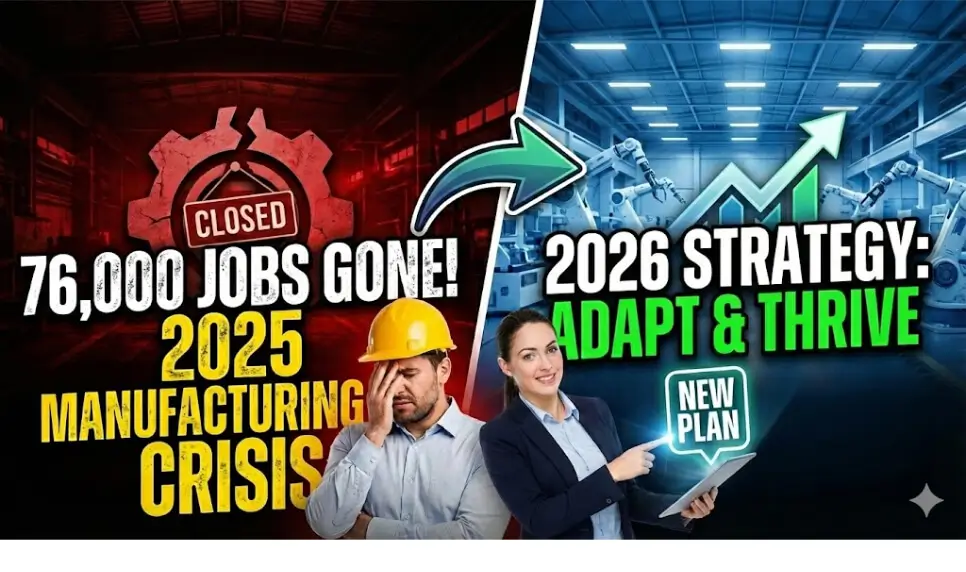
Manufacturing lost 76K jobs in 2025. But some companies increased margins 40% anyway. Here's the 3-decision framework that separates winners from those getting crushed.